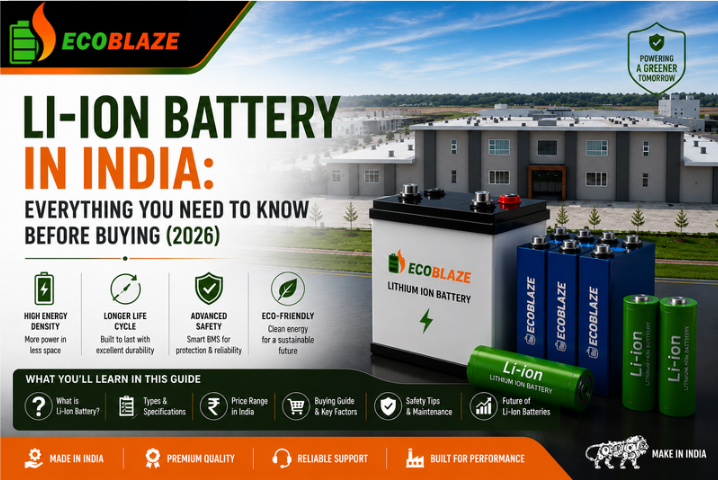
Li-Ion Battery in India: Everything You Need to Know Before Buying
A Li-ion battery in India is a rechargeable battery widely used in electric vehicles, solar energy storage, home inverters, industrial equipment, and portable electronics. Known for high energy density, faster charging, longer lifespan, and maintenance-free operation, Li-ion batteries have become the preferred energy storage solution across residential, commercial, and industrial applications.
India is rapidly embracing clean energy and electric mobility, making Li-ion batteries one of the most important technologies driving this transformation. From powering electric scooters and passenger vehicles to storing renewable energy and supporting industrial backup systems, lithium-ion batteries have become an essential part of modern infrastructure.
With government initiatives promoting electric vehicles and domestic battery manufacturing, the demand for Li-ion battery in India continues to grow every year. Businesses and consumers are increasingly replacing traditional lead-acid batteries with lithium-ion technology because of its higher efficiency, longer lifespan, and lower maintenance requirements.
Whether you’re looking for a battery for your electric vehicle, solar installation, or industrial equipment, understanding the advantages and applications of lithium-ion batteries will help you make the right investment.
What Is a Li-Ion Battery?
A Li-ion (lithium-ion) battery is a rechargeable battery that stores and releases energy through the movement of lithium ions between the positive and negative electrodes. Unlike conventional battery technologies, lithium-ion batteries deliver higher energy density, faster charging, lightweight construction, and superior cycle life.
Today, lithium-ion batteries are used across numerous industries, including:
- Electric Vehicles (EVs)
- Solar Energy Storage
- Residential Inverters
- UPS Systems
- Telecom Infrastructure
- Medical Equipment
- Consumer Electronics
- Industrial Automation
Because they offer greater efficiency and durability, lithium-ion batteries have become the preferred energy storage solution in India.
Why Li-Ion Batteries Are Gaining Popularity in India
India’s energy landscape is changing rapidly. The shift toward sustainable transportation and renewable energy has significantly increased the adoption of lithium-ion batteries.
Several factors contribute to this growing demand.
1. Rapid Growth of Electric Vehicles
India is witnessing remarkable growth in electric mobility. Electric scooters, motorcycles, e-rickshaws, passenger cars, and commercial fleets increasingly rely on lithium-ion batteries for better performance and lower operating costs.
Manufacturers producing two-wheeler batteries are now focusing on lithium-ion technology because it provides the following:
- Longer driving range
- Faster charging
- Lightweight construction
- Improved battery life
Similarly, businesses using three-wheeler batteries are transitioning to lithium-ion systems to reduce maintenance expenses and maximize vehicle uptime.
2. Expansion of Renewable Energy
India continues to invest heavily in renewable energy projects, particularly solar power.
Efficient energy storage is essential for maximizing the benefits of renewable energy, and lithium-ion batteries have become the preferred choice due to their:
- High charging efficiency
- Longer service life
- Greater usable capacity
- Faster charging
- Compact design
A reliable electric vehicle battery pack also shares many of the same technologies used in residential and commercial energy storage systems, demonstrating the versatility of lithium-ion battery solutions.
3. Government Initiatives
Government programs encouraging electric mobility and domestic manufacturing have accelerated the adoption of lithium-ion batteries across India.
Some of the key initiatives include:
- Make in India
- FAME India Scheme
- Production Linked Incentive (PLI)
- National Electric Mobility Mission Plan
- Renewable Energy Development Programs
These initiatives support local manufacturing while reducing dependence on imported battery technologies.
Top Benefits of Li-Ion Batteries
High Energy Density
One of the biggest advantages of a Li-ion battery in India is its high energy density.
Compared to traditional lead-acid batteries, lithium-ion batteries store significantly more energy within a smaller and lighter battery pack.
Benefits include:
- Longer operating time
- Better vehicle range
- Compact battery packs
- Improved efficiency
- Reduced installation space
This advantage is why nearly every modern electric vehicle battery pack is powered by lithium-ion technology.
Lightweight Construction
Weight plays an important role in energy efficiency.
Lithium-ion batteries are approximately 50–70% lighter than equivalent lead-acid batteries.
This provides several benefits:
- Better vehicle performance
- Improved acceleration
- Higher energy efficiency
- Easier installation
- Lower transportation costs
For electric mobility solutions, lightweight batteries translate directly into better driving range and improved overall efficiency.
Longer Lifespan
Lithium-ion batteries offer significantly longer operational life than traditional battery technologies.
A premium lithium-ion battery typically delivers:
- 2,000–5,000 charging cycles
- 8–10 years of service
- Consistent voltage output
- Reliable long-term performance
Although the initial investment is higher, the longer lifespan reduces replacement costs and lowers the total cost of ownership.
Fast Charging
Fast charging is another major advantage of lithium-ion batteries.
Depending on battery capacity and charger specifications, lithium-ion batteries can achieve:
- 80% charge within one hour
- Full charge in approximately 2–4 hours
- Higher charging efficiency
- Lower energy losses
This makes lithium-ion batteries ideal for electric vehicles, logistics fleets, and commercial applications where downtime directly impacts productivity.
Maintenance-Free Operation
Unlike flooded lead-acid batteries, lithium-ion batteries require virtually no maintenance.
Users do not need to:
- Refill water
- Check electrolyte levels
- Clean corrosion
- Perform equalization charging
Maintenance-free operation reduces long-term operating expenses while improving reliability.
Applications of Li-Ion Batteries in India
The versatility of lithium-ion batteries has made them indispensable across numerous industries.
Electric Vehicles
Electric mobility remains the largest consumer of lithium-ion batteries.
Applications include:
- Electric scooters
- Electric motorcycles
- Passenger EVs
- Electric buses
- Commercial delivery vehicles
- E-rickshaws
Growing demand for electric bike lithium battery solutions reflects the increasing popularity of electric two-wheelers across urban and rural India.
Similarly, a high-performance lithium e-bike battery delivers improved riding range, lightweight performance, and faster charging for modern e-bikes.
Residential Energy Storage
Homeowners are increasingly installing lithium-ion batteries alongside rooftop solar systems.
These batteries provide:
- Reliable backup power
- Lower electricity bills
- Efficient solar energy storage
- Long service life
- Minimal maintenance
Industrial Applications
Industries depend on lithium-ion batteries for:
- Telecom towers
- Data centers
- UPS systems
- Hospitals
- Manufacturing facilities
- Warehouses
Reliable backup power minimizes downtime while improving operational efficiency.
Choosing the Right Li-Ion Battery in India
Selecting the right battery involves more than comparing prices.
Consider the following factors:
- Battery capacity
- Voltage compatibility
- Battery Management System (BMS)
- Cycle life
- Warranty
- Charging speed
- Safety certifications
- Manufacturer reputation
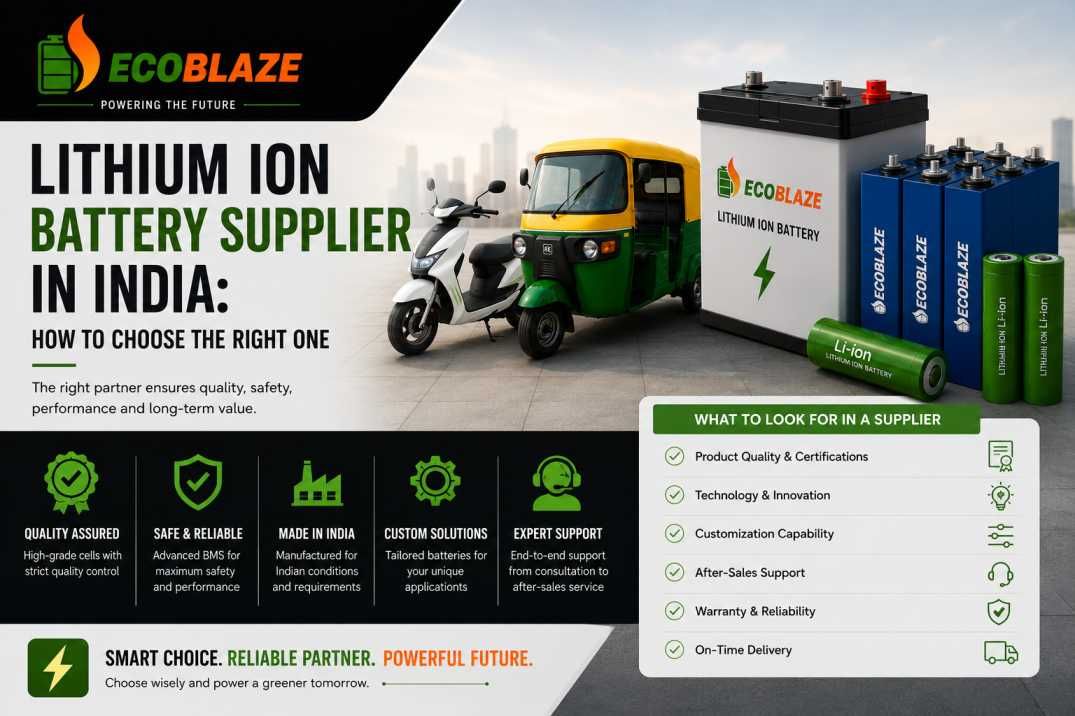
When researching lithium-ion battery companies in India, compare product quality, technical support, warranty coverage, and manufacturing standards instead of focusing only on the initial purchase price.
Why Quality Matters
Choosing a certified lithium-ion battery ensures:
- Better safety
- Longer lifespan
- Higher efficiency
- Reliable performance
- Lower maintenance costs
- Improved return on investment
Investing in a quality battery today helps reduce long-term operating costs while providing dependable performance for years.
Li-Ion Battery vs Lead-Acid Battery
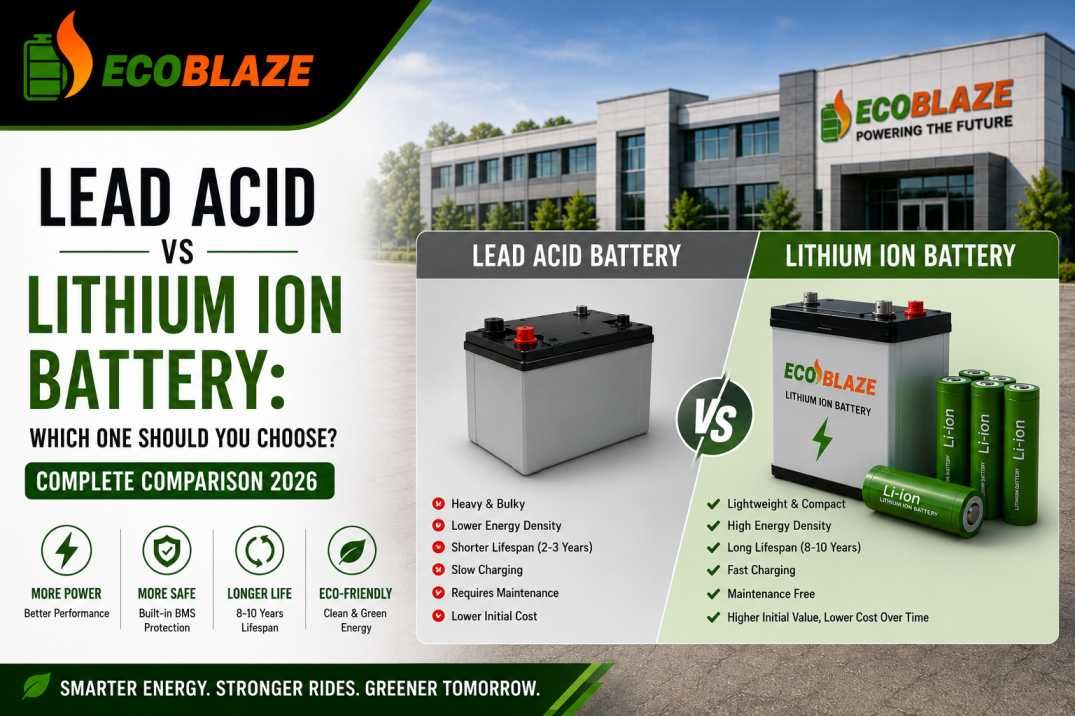
When choosing an energy storage solution, many buyers compare lithium-ion batteries with conventional lead-acid batteries. While both technologies have their applications, lithium-ion batteries outperform lead-acid batteries in terms of efficiency, lifespan, charging speed, and maintenance requirements.
| Feature | Li-Ion Battery | Lead-Acid Battery |
|---|---|---|
| Lifespan | 8–10 Years | 2–4 Years |
| Charging Time | 2–4 Hours | 8–10 Hours |
| Weight | Lightweight | Heavy |
| Maintenance | Maintenance-Free | Regular Maintenance Required |
| Energy Efficiency | 95–98% | 70–85% |
| Cycle Life | 2,000–5,000 Cycles | 300–700 Cycles |
| Depth of Discharge | Up to 90% | Around 50% |
| Environmental Impact | Lower | Higher |
| Long-Term Cost | Lower | Higher |
If you’re comparing lithium vs lead acid e-rickshaw batteries, lithium-ion technology offers faster charging, higher efficiency, lower maintenance, and a much longer lifespan. Although the upfront investment is higher, the long-term savings make lithium-ion batteries the preferred choice for commercial fleet operators and individual vehicle owners alike.
Factors That Affect Li-Ion Battery Prices in India
The price of a Li-ion battery in India depends on several important factors. Understanding these factors helps buyers choose the right battery based on their application and budget.
Battery Capacity:
Higher-capacity batteries store more energy and naturally cost more than smaller battery packs.
- Battery Chemistry: Different lithium battery chemistries, such as LiFePO₄ (Lithium Iron Phosphate) and NMC (Nickel Manganese Cobalt), have different performance characteristics and pricing.
- Battery Management System (BMS): An advanced Battery Management System improves battery safety, efficiency, and lifespan, making it an important component of premium lithium-ion batteries.
- Charging Speed: Fast-charging batteries often use advanced cell technology, which can influence the overall price.
- Manufacturing Quality: Certified batteries manufactured under strict quality standards typically provide better reliability and longer service life, making them a more valuable long-term investment.
How to Choose the Best Li-Ion Battery in India
Selecting the right lithium-ion battery requires evaluating more than just the purchase price.
Consider the following factors before making a decision:
- Battery capacity (Ah)
- Voltage compatibility
- Charging time
- Cycle life
- Battery chemistry
- Battery Management System (BMS)
- Safety certifications
- Warranty coverage
- Manufacturer reputation
- Technical support
If you’re exploring lithium-ion battery companies in India, compare product quality, engineering expertise, customization capabilities, and after-sales support to ensure you receive the best value for your investment.
Future of Li-Ion Batteries in India
India is expected to become one of the world’s largest lithium-ion battery markets over the coming years. Rising adoption of electric vehicles, renewable energy projects, and energy storage systems continues to drive demand for high-performance batteries.
Key trends shaping the future include the following:
- Increased domestic battery manufacturing
- Expansion of electric vehicle infrastructure
- Growth of solar energy storage
- Advances in battery recycling
- Improved battery safety technologies
- Higher energy density and faster charging solutions
As technology continues to evolve, lithium-ion batteries will play a crucial role in India’s transition toward cleaner transportation and sustainable energy.
Why Businesses Prefer Li-Ion Batteries
Businesses across multiple industries are switching to lithium-ion batteries because they offer measurable operational and financial benefits.
These include:
- Reduced maintenance costs
- Lower energy consumption
- Faster charging cycles
- Increased equipment uptime
- Longer replacement intervals
- Improved operational efficiency
- Better return on investment
Whether powering electric vehicles, industrial equipment, or renewable energy systems, lithium-ion batteries help businesses reduce costs while improving productivity.
People Also Ask
- What is a Li-ion battery used for in India?
Li-ion batteries are widely used in electric vehicles, electric scooters, e-rickshaws, solar energy storage systems, home inverters, UPS systems, telecom infrastructure, industrial machinery, and portable electronic devices. - Why are Li-ion batteries better than lead-acid batteries?
Li-ion batteries provide higher energy density, faster charging, longer lifespan, maintenance-free operation, and greater efficiency, making them a superior alternative to traditional lead-acid batteries. - How long does a Li-ion battery last?
A quality lithium-ion battery generally lasts between 2,000 and 5,000 charging cycles, which translates to approximately 8–10 years, depending on usage and operating conditions. - Are Li-ion batteries safe?
Yes. Modern lithium-ion batteries include advanced Battery Management Systems (BMS) that protect against overcharging, overheating, short circuits, excessive current, and deep discharge, ensuring safe and reliable operation. - How do I choose the best Li-ion battery in India?
Choose a battery based on capacity, voltage, battery chemistry, cycle life, BMS quality, warranty, certifications, and the reputation of the manufacturer.
Frequently Asked Questions (FAQs)
- Which Li-ion battery is best for electric vehicles?
The best Li-ion battery depends on your vehicle type and usage. Look for batteries with a high cycle life, advanced BMS, fast-charging capability, and comprehensive warranty coverage. - Can Li-ion batteries be used with solar power systems?
Yes. Lithium-ion batteries are one of the best energy storage solutions for residential and commercial solar installations because they offer high efficiency, deep discharge capability, and long operational life. - Are Li-ion batteries maintenance-free?
Yes. Unlike flooded lead-acid batteries, lithium-ion batteries require no water refilling, electrolyte checks, or regular maintenance. - Why are Li-ion batteries pricier?
The initial purchase cost is higher due to advanced materials and manufacturing processes. However, their longer lifespan, lower maintenance expenses, and higher efficiency result in a significantly lower total cost of ownership. - Can Li-ion batteries be customized?
Yes. Manufacturers offer customized battery packs based on voltage, capacity, dimensions, and application requirements for electric vehicles, solar systems, industrial equipment, and other energy storage solutions.
Conclusion
The demand for Li-ion batteries in India is growing rapidly as electric mobility, renewable energy, and industrial automation continue to expand. With their high energy density, fast charging capability, lightweight construction, maintenance-free operation, and long service life, lithium-ion batteries have become the preferred choice for modern energy storage applications.
Whether you are looking for batteries for electric scooters, passenger EVs, solar energy systems, industrial backup power, or commercial fleets, investing in high-quality lithium-ion technology delivers long-term performance and significant cost savings.
If you’re planning to upgrade your energy storage solution, compare reliable lithium-ion battery companies in India and explore our range of two-wheeler batteries, three-wheeler batteries, electric bike lithium batteries, lithium e-bike batteries, and advanced electric vehicle battery pack solutions. If you need expert guidance or a customized battery solution, request a quote from Ecoblaze to find the right lithium-ion battery for your specific application.