Lithium-Ion Batteries Advantages: Why They Are the Future of Energy Storage
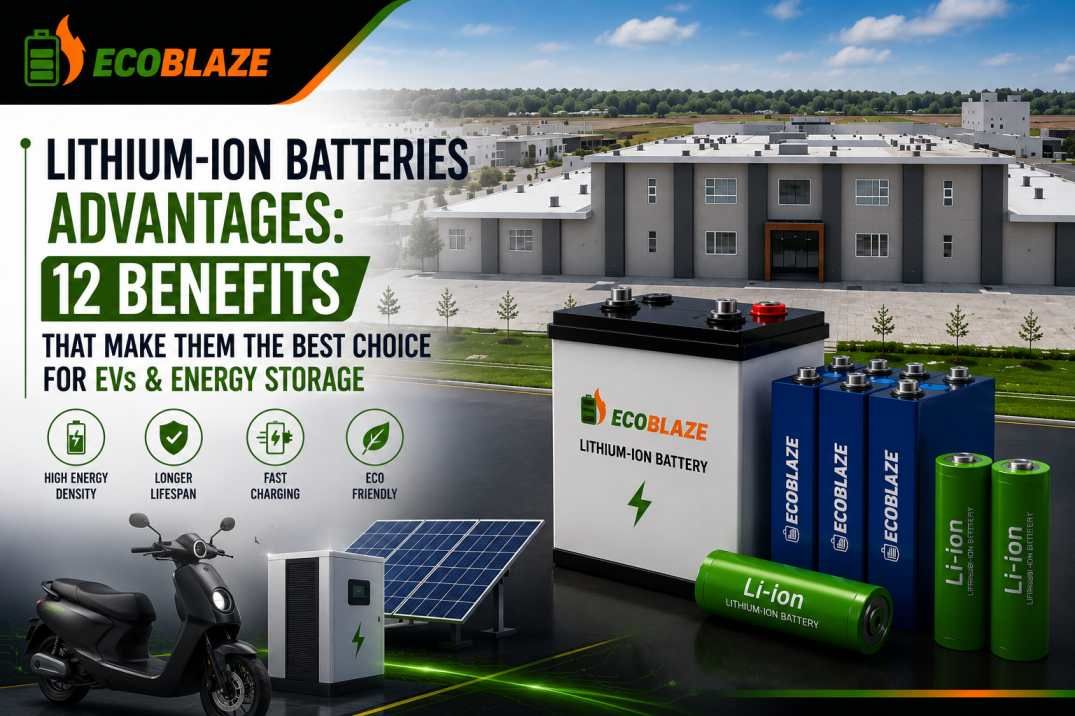
Lithium-ion batteries offer high energy density, lightweight construction, fast charging, a longer lifespan, zero maintenance, and superior efficiency compared to traditional lead-acid batteries. These advantages make them the preferred choice for electric vehicles, renewable energy systems, industrial equipment, and portable electronics.
What Are Lithium-Ion Batteries?
Lithium-ion (Li-ion) batteries are rechargeable batteries that store and release electrical energy through the movement of lithium ions between the positive and negative electrodes. Due to their excellent performance, long service life, and compact design, they have become the preferred battery technology for electric vehicles, renewable energy storage, consumer electronics, and industrial applications.
Today, lithium-ion batteries power everything from smartphones and laptops to solar energy systems and electric mobility solutions. Their ability to deliver more power while occupying less space has transformed multiple industries, making them the backbone of modern energy storage.
Understanding the advantages of lithium-ion batteries can help you make an informed decision, whether you are investing in an electric vehicle battery pack, installing a solar energy system, or upgrading industrial equipment.
Why Lithium-Ion Batteries Are Better Than Traditional Batteries
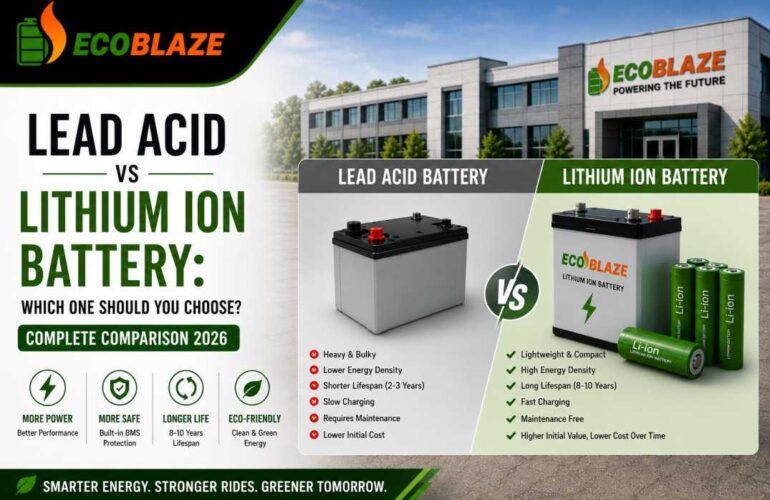
For decades, lead-acid batteries dominated the market. However, advancements in battery technology have made lithium-ion batteries the superior option for most applications.
Unlike conventional batteries that require regular maintenance and have shorter lifespans, lithium-ion batteries provide consistent performance, higher efficiency, and significantly lower operating expenses over time.
This is one of the primary reasons why manufacturers of three wheeler batteries and two wheeler batteries are increasingly adopting lithium-ion technology for modern electric vehicles.
Top Lithium-Ion Batteries Advantages
1. High Energy Density
One of the biggest lithium-ion batteries advantages is their exceptional energy density.
Energy density refers to the amount of energy a battery can store relative to its size and weight.
Compared to traditional lead-acid batteries, lithium-ion batteries can store 2–3 times more energy in the same physical space.
Benefits of High Energy Density
- Longer driving range for electric vehicles
- More backup power for energy storage systems
- Compact battery packs
- Better portability
- Reduced installation space
This advantage is why almost every modern electric vehicle battery pack uses lithium-ion cells instead of heavier alternatives.
2. Lightweight Design
Weight plays a major role in vehicle efficiency.
Lithium-ion batteries are approximately 50–70% lighter than equivalent lead-acid batteries.
A lighter battery provides several benefits:
- Improved vehicle performance
- Better fuel or energy efficiency
- Easier installation
- Lower transportation costs
- Increased payload capacity
This advantage is especially valuable for electric scooters and motorcycles that use Electric Bike Lithium Battery systems, where reducing weight directly improves speed and driving range.
Manufacturers of Lithium Ebike Battery solutions also prioritize lightweight battery designs because every kilogram saved enhances rider comfort and battery efficiency.
3. Longer Lifespan
Battery lifespan is one of the biggest factors affecting long-term ownership costs.
Unlike conventional batteries that may require replacement every 2–3 years, lithium-ion batteries typically last 8–10 years, depending on usage.
Many premium lithium-ion batteries can deliver the following:
- 2,000–5,000 charge cycles
- Stable voltage throughout discharge
- Consistent performance over time
- Lower replacement frequency
Although the initial investment is higher, the total cost of ownership becomes significantly lower because replacements are far less frequent.
Read about li-ion battery manufacturers india
4. Fast Charging Capability
Charging speed has become a deciding factor for businesses and EV owners alike.
Another major lithium-ion batteries advantage is their ability to charge much faster than lead-acid batteries.
Depending on battery size and charger specifications, most lithium-ion batteries can achieve the following:
- 80% charge within one hour
- Full charge in approximately 2–4 hours
- High charging efficiency
- Minimal energy loss
This is particularly beneficial for commercial fleets, electric delivery vehicles, and e-rickshaws that need to maximize uptime.
Businesses comparing lithium vs lead acid e-rickshaw battery options often choose lithium-ion because faster charging allows vehicles to return to service much sooner.
5. High Efficiency
Efficiency determines how much stored energy actually powers your equipment.
Lithium-ion batteries typically achieve an efficiency rating of 95–98%, whereas traditional lead-acid batteries generally operate between 70 and 85% efficiency.
Higher efficiency means:
- Less wasted electricity
- Lower charging costs
- Better energy utilization
- Reduced operational expenses
For solar energy storage and industrial backup systems, this improved efficiency translates directly into long-term savings.
6. Maintenance-Free Operation
Unlike flooded lead-acid batteries, lithium-ion batteries require virtually no routine maintenance.
There is no need for:
- Water refilling
- Acid level monitoring
- Equalization charging
- Corrosion cleaning
- Regular servicing
This maintenance-free design significantly reduces operating costs while increasing reliability.
For businesses managing large fleets or industrial power systems, eliminating maintenance can save hundreds of hours each year.
Lithium-Ion vs Lead-Acid Batteries
| Feature | Lithium-Ion Battery | Lead-Acid Battery |
|---|---|---|
| Weight | Lightweight | Heavy |
| Charging Time | Less than Lead-Acid Battery | 8–12 Hours |
| Lifespan | 8–10 Years | 2–4 Years |
| Maintenance | None | Regular |
| Energy Efficiency | 95–98% | 70–85% |
| Energy Density | Very High | Low |
| Depth of Discharge | Up to 90% | Around 50% |
| Total Cost of Ownership | Lower | Higher |
When evaluating lithium vs lead acid e-rickshaw batteries, lithium-ion technology consistently delivers better performance, faster charging, and a longer service life, making it a more economical choice over the long term.
Choosing the Right Lithium-Ion Battery
With growing demand for electric mobility and renewable energy, selecting the right battery supplier is just as important as choosing the right technology.
When comparing Lithium Ion Battery Companies in India, consider the following factors:
- Battery quality and certifications
- Cycle life
- Warranty coverage
- Battery Management System (BMS)
- Safety standards
- Charging efficiency
- Technical support
- Product range for different vehicle segments
Choosing a trusted manufacturer ensures better performance, enhanced safety, and reliable after-sales support for your battery investment.
7. Low Self-Discharge Rate
One of the lesser-known but highly valuable lithium-ion batteries advantages is their low self-discharge rate.
Even when not in use, every rechargeable battery gradually loses its stored energy. Lithium-ion batteries lose only 1–3% of their charge per month, compared to lead-acid batteries, which can lose 5–15% over the same period.
Benefits of Low Self-Discharge
- Longer shelf life
- Reliable emergency backup power
- Better performance for seasonal vehicles
- Reduced need for frequent recharging
- Improved energy retention
This makes lithium-ion batteries ideal for backup power systems, emergency lighting, solar storage, and electric vehicles that may remain unused for extended periods.
8. Deep Depth of Discharge (DoD)
Another significant lithium-ion batteries advantage is their ability to safely operate at a much higher Depth of Discharge (DoD).
“Depth of discharge” refers to how much of a battery’s stored energy can be used before it needs recharging.
- Lithium-Ion Batteries: Up to 90–95% DoD
- Lead-Acid Batteries: Around 50% DoD
A higher DoD means users can utilize more of the battery’s capacity without reducing its lifespan.
Why Higher DoD Matters
- Longer runtime
- More usable energy
- Fewer battery replacements
- Lower overall energy costs
This is especially beneficial for solar energy storage systems and electric vehicles where maximizing usable energy is essential.
9. Environmentally Friendly Technology
As industries move toward cleaner energy solutions, sustainability has become a key purchasing factor.
Lithium-ion batteries support environmental goals by offering:
- Longer service life
- Lower carbon emissions over their lifetime
- Reduced waste generation
- Higher energy efficiency
- Fewer battery replacements
Because one lithium-ion battery can often replace multiple lead-acid batteries during its lifetime, the overall environmental impact is significantly reduced.
Many businesses investing in electric mobility choose lithium-ion technology to support their sustainability initiatives while lowering operational costs.
10. Superior Safety Features
Modern lithium-ion batteries are equipped with advanced Battery Management Systems (BMS) that continuously monitor battery health and performance.
The BMS protects the battery against:
- Overcharging
- Deep discharge
- Short circuits
- Excessive current
- Overheating
- Cell imbalance
These built-in safety mechanisms improve battery reliability while extending its operational life.
When purchasing from trusted Lithium Ion Battery Companies in India, always ensure the battery includes an intelligent battery management system for enhanced safety and performance.
11. Excellent Performance Across Various Applications
One reason lithium-ion batteries dominate today’s market is their versatility.
They are widely used in:
- Electric Cars
- Electric Scooters
- Electric Motorcycles
- E-Rickshaws
- Golf Carts
- Forklifts
- Solar Energy Storage
- Telecom Backup Systems
- UPS Systems
- Marine Applications
- Industrial Equipment
Whether you require reliable three wheeler batteries for commercial transportation or efficient two wheeler batteries for personal mobility, lithium-ion technology delivers exceptional performance across every application.
Its flexibility has made it the preferred choice for manufacturers worldwide.
12. Lower Total Cost of Ownership
Although lithium-ion batteries typically have a higher upfront purchase price, they offer substantial long-term savings.
Factors contributing to a lower total cost of ownership include:
- Longer lifespan
- Reduced maintenance costs
- Faster charging
- Lower electricity consumption
- Fewer replacements
- Higher efficiency
- Better productivity
For commercial fleet owners, investing in lithium-ion batteries often results in significant savings over several years, making them a cost-effective solution despite the initial investment.
Applications of Lithium-Ion Batteries
The outstanding performance of lithium-ion technology has made it the preferred power source across numerous industries.
Electric Vehicles (EVs)
Electric mobility has become one of the fastest-growing sectors globally. Lithium-ion batteries are now the standard choice for electric cars, buses, scooters, motorcycles, and e-rickshaws because they offer lightweight construction, high energy density, and extended driving range.
A high-quality electric vehicle battery pack enables faster charging, longer operational life, and improved vehicle efficiency.
Electric Bikes
Electric bicycles continue to gain popularity due to rising fuel costs and increasing environmental awareness.
A premium Lithium Ebike Battery provides:
- Longer riding distance
- Lightweight performance
- Faster charging
- Better acceleration
- Extended battery life
Similarly, an Electric Bike Lithium Battery ensures consistent power delivery, allowing riders to enjoy smoother and more reliable performance on every journey.
Solar Energy Storage
Renewable energy systems depend heavily on efficient energy storage.
Lithium-ion batteries are ideal for solar applications because they offer the following:
- High charging efficiency
- Greater usable capacity
- Longer lifespan
- Minimal maintenance
- Reliable backup during power outages
Their high depth of discharge makes them more effective than traditional battery technologies for storing solar-generated electricity.
Industrial Backup Power
Industries require uninterrupted power to maintain productivity.
Lithium-ion batteries are widely used in the following:
- UPS systems
- Data centers
- Telecom towers
- Manufacturing facilities
- Hospitals
- Emergency backup systems
Their fast charging capability and reliable performance help reduce downtime and improve operational efficiency.
How to Choose the Best Lithium-Ion Battery
Before purchasing a lithium-ion battery, consider the following factors:
- Battery capacity (Ah)
- Voltage compatibility
- Cycle life
- Battery Management System (BMS)
- Charging time
- Warranty period
- Safety certifications
- Manufacturer reputation
- After-sales support
Selecting the right battery ensures better performance, improved safety, and a longer service life.
People Also Ask
- What are the main advantages of lithium-ion batteries?
The main advantages of lithium-ion batteries include high energy density, lightweight design, fast charging, longer lifespan, maintenance-free operation, high efficiency, low self-discharge, and superior safety features. - Why are lithium-ion batteries better than lead-acid batteries?
Lithium-ion batteries charge faster, last significantly longer, require no maintenance, offer higher energy efficiency, weigh much less, and provide a greater depth of discharge than lead-acid batteries. - How long do lithium-ion batteries last?
Most lithium-ion batteries last between 8 and 10 years or approximately 2,000 to 5,000 charge cycles, depending on usage, charging habits, and operating conditions. - Are lithium-ion batteries safe?
Yes. Modern lithium-ion batteries include advanced Battery Management Systems (BMS) that protect against overcharging, overheating, short circuits, and excessive discharge, ensuring safe and reliable operation. - Where are lithium-ion batteries commonly used?
Lithium-ion batteries are widely used in electric vehicles, electric bikes, solar energy systems, UPS systems, telecom towers, industrial equipment, consumer electronics, and energy storage applications.
Frequently Asked Questions (FAQs)
- What is the most significant advantage of lithium-ion batteries?
The most significant advantage is their high energy density, which allows them to store more energy while remaining lightweight and compact. - Do lithium-ion batteries require maintenance?
No. Unlike lead-acid batteries, lithium-ion batteries require virtually no maintenance throughout their lifespan. - Can lithium-ion batteries be used for solar systems?
Yes. Their high efficiency, long lifespan, and deep discharge capability make them an excellent choice for residential and commercial solar energy storage. - Are lithium-ion batteries suitable for electric vehicles?
Absolutely. Lithium-ion batteries are the preferred technology for electric cars, scooters, motorcycles, and commercial EVs because they provide better performance, longer driving range, and faster charging. - Are lithium-ion batteries worth the higher initial cost?
Yes. Although the upfront cost is higher, their longer lifespan, lower maintenance requirements, and improved efficiency result in a much lower total cost of ownership over time.
Conclusion
The advantages of lithium-ion batteries extend far beyond faster charging and longer lifespan. Their lightweight construction, high energy density, superior efficiency, maintenance-free operation, and advanced safety features make them the preferred energy storage solution for modern applications.
From powering electric vehicles and renewable energy systems to supporting industrial operations and backup power solutions, lithium-ion technology continues to transform how energy is stored and utilized. As the demand for sustainable and efficient energy solutions grows, lithium-ion batteries remain the benchmark for performance, reliability, and long-term value.
If you’re planning to upgrade your energy storage system, invest in electric mobility, or explore high-performance battery solutions, choosing the right battery technology is crucial. Explore our range of lithium-ion solutions, compare products for your application, or request a quote from Ecoblaze to find the ideal battery for your needs.