India now has dozens of companies calling themselves li ion battery manufacturers. Most of them aren’t. They’re assemblers sourcing cells from China, resellers rebranding imported packs, or distributors with no manufacturing capability at all.
The difference matters enormously for OEMs, fleet operators, or dealers who are building a serious EV battery business, particularly in terms of quality consistency, certification accountability, customization capability, and the handling of issues that arise after purchase.
This guide tells you exactly what to look for when evaluating manufacturers of li-ion batteries in India, what questions to ask, and how to separate the real manufacturers from the noise.
What Are Li Ion Battery Manufacturers?
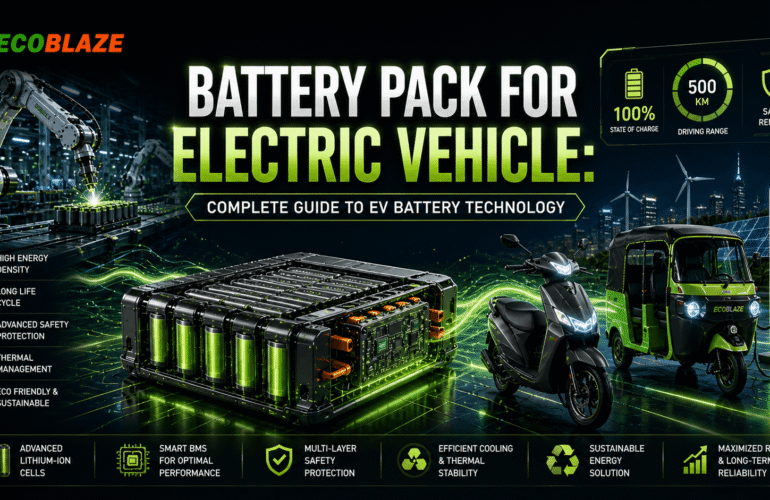
Li ion battery manufacturers in India are companies that design, source cells for, assemble, test, and supply lithium-ion battery packs for electric vehicles, energy storage, and industrial applications.
A genuine manufacturer controls the full production process—cell selection and sourcing, battery management system design, pack assembly, quality testing, and certification. This gives them full accountability for pack performance, the ability to customize specifications, and direct visibility into why a pack fails if it does.
The spectrum of companies calling themselves li-ion battery manufacturers in India:
- Vertically integrated manufacturers — design packs, source A-grade cells, build BMS in-house, run full testing
- Assemblers—source cells and off-the-shelf BMS units from third parties, assemble packs, and have limited design control
- Contract manufacturers—build packs to client specifications using their own production facility
- Importers/resellers—import finished packs from overseas factories and sell under a local brand
Each model exists in the market. Knowing which you’re dealing with determines what you can actually expect from pricing, consistency, technical support, and long-term supply reliability.
Why the Choice of Li Ion Battery Manufacturer Matters
India’s EV market is growing fast. With that growth comes a wave of new companies entering the battery supply chain — many without the manufacturing depth or certification compliance needed for serious EV applications.
Choosing from the wrong end of that spectrum leads to:
- Inconsistent cell quality — performance varying batch to batch, often undetected until packs are in service
- BMS failures under real-world load — generic BMS units that don’t handle the thermal and current profiles of Indian road use
- Certification gaps — packs that don’t actually meet AIS 156 requirements despite claims
- No customization—inability to adjust voltage, capacity, or BMS features for your specific vehicle
- Fragile supply chains — single-source cell dependency that creates delivery problems
The right li ion battery manufacturer in India is a long-term partner, not just a one-time vendor.
What Separates Genuine Li Ion Battery Manufacturers in India
1. In-House BMS Design
This distinction is the clearest line between manufacturers and assemblers. A genuine li-ion battery manufacturer designs or significantly customizes the Battery Management System in-house—controlling cell-level protection thresholds, communication protocols, thermal management parameters, and IoT features.
Off-the-shelf BMS units from generic suppliers offer limited customization and limited accountability. An in-house designed battery management system means the manufacturer understands exactly how their pack behaves under load, what protections are active, and how to diagnose faults in the field.
2. Cell Grade and Source Transparency
Genuine li-ion battery manufacturers in India are open about their cell sourcing—chemistry (NMC or LFP), cell format (cylindrical 21700/18650, prismatic, or pouch), grade (A-grade EV cells vs. ungraded), and manufacturer.
The difference between A-grade NMC 21700 cells and ungraded alternatives is significant—in energy density, cycle life consistency, and failure rates over time. For two wheeler batteries where pack weight directly affects range, A-grade NMC 21700 cylindrical cells are the current standard. For three wheeler batteries in commercial use, A-grade LFP is non-negotiable for the cycle life claims to hold.
3. AIS 156 Certification
Mandatory for any lithium-ion battery pack used in a registered electric vehicle in India since 2022. Genuine li-ion battery manufacturers in India hold AIS 156 certification for their specific pack models—not just a general brand registration.
When evaluating manufacturers, please request the certification document that references the specific pack model and configuration you’re ordering. A manufacturer who can’t produce the certification for the exact pack is either uncertified or selling you a certified spec that doesn’t match what you’re actually receiving. Full details on what this standard covers can be found on the certifications and compliance page.
4. End-to-End Testing Capability
Serious li ion battery manufacturers in India run their own testing—cycle life testing, thermal abuse testing, IP rating verification, and BMS protection validation. Manufacturers who rely entirely on third-party testing for every batch have less control over consistency.
Ask for test reports — not just certifications. A manufacturer with in-house testing capability can provide batch-level test data, not just type-approval certificates from initial certification.
5. Customisation Depth
Generic packs off a shelf have fixed voltage, capacity, and BMS configuration. Genuine li-ion battery manufacturers in India can customize all three—adjusting nominal voltage, Ah rating, cell configuration, BMS protection thresholds, and communication protocols to match a specific vehicle platform.
For OEMs, this flexibility matters from the first design conversation. For fleet operators retrofitting vehicles, it matters when your vehicle’s motor controller needs a specific voltage and capacity that doesn’t match off-the-shelf offerings.
NMC vs LFP: Which Chemistry for Which Application
India’s li ion battery manufacturers primarily work with two chemistries for EV applications. Understanding the difference is essential before choosing a manufacturer for your segment.
| Factor | NMC | LFP |
|---|---|---|
| Energy Density | 150–220 Wh/kg | 90–120 Wh/kg |
| Cycle Life | 800–1,200 cycles | 2,000–3,000+ cycles |
| Thermal Stability | Moderate | High |
| Best For | Two-wheelers, e-bikes | Three-wheelers, commercial EVs |
| Weight Advantage | High | Moderate |
| Cost | Higher | Lower per cycle |
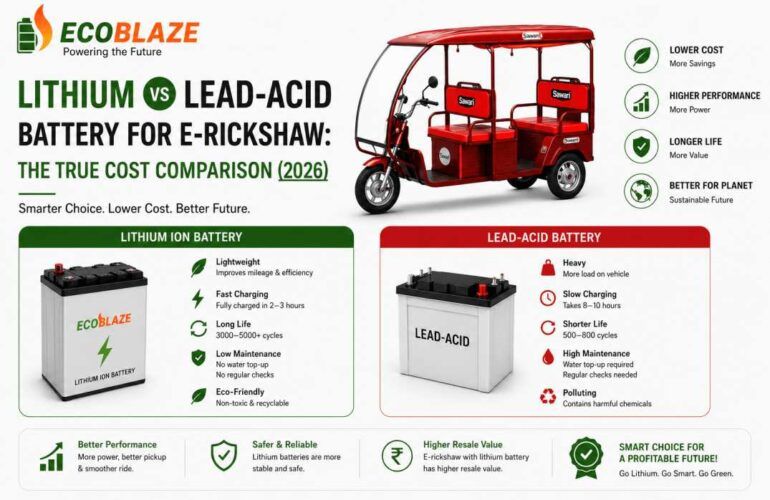
For the two-wheeler segment, NMC’s energy density advantage directly translates to range. For commercial three-wheelers running multiple shifts daily, LFP’s cycle life advantage translates to years of additional service before replacement. Our lead acid vs lithium ion comparison covers how both chemistries stack up against lead-acid across key metrics.
What to Ask Before You Commit
Before committing to any manufacturer, these questions separate serious players from the rest:
- Do you design your own BMS or source it externally? — in-house BMS design is a fundamental capability signal
- What cells do you use—chemistry, format, grade, and source? — A-grade cells from known manufacturers only
- Can you provide AIS 156 certification for this specific pack model? — not just a brand certificate
- What cycle life testing have you conducted, and at what depth of discharge? — numbers without test data are marketing
- Can you customize voltage and capacity for our application? — a manufacturer says yes; a reseller usually can’t
- What is your warranty coverage and process? — get it in writing
- What is your production lead time and MOQ for repeat orders? — supply reliability matters as much as product quality
- Do you have in-house IP rating testing or is it third-party? — IP67 claims without test evidence are common
Li Ion Battery Manufacturers in India vs Overseas Suppliers
Some OEMs consider importing directly from Chinese battery manufacturers rather than sourcing from Indian li ion battery manufacturers. The trade-offs are real and worth understanding.
| Factor | Indian Manufacturer | Overseas Supplier |
|---|---|---|
| AIS 156 Compliance | Direct accountability | Importer’s responsibility |
| Lead Time | Days to weeks | 4-12 weeks |
| Customisation | Easier communication | Language/timezone friction |
| After-Sales Support | Local team | Remote or unavailable |
| Currency Risk | INR pricing | USD/CNY exposure |
| Import Duties | None | 10-15% on cells/packs |
| Supply Disruption Risk | Lower | Higher (shipping, geopolitics) |
For most Indian EV OEMs and fleet operators, local li ion battery manufacturers in India deliver better total value even when per-unit costs are slightly higher — faster response, no import complexity, and direct AIS 156 accountability.
Key Specifications to Evaluate
When comparing lithium-ion battery makers in India, evaluate these specifications before making any decision:
For Two-Wheeler Applications:
- Cell chemistry: NMC 21700 preferred
- Nominal voltage: 48V, 60V, or 72V
- Cycle life: 1,000+ at 80% DoD
- IP rating: IP65 minimum
- Charge time: ≤3 hours
- Weight: As low as possible for the capacity
For Three-Wheeler and Commercial Applications:
- Cell chemistry: LFP preferred
- Voltage options: 51.2V, 60V, 72V
- Cycle life: 2,500+ at 80% DoD
- IP rating: IP67
- Charge time: 3-4 hours
- BMS: IoT-enabled with CAN/RS485
Our guide on electric bike lithium battery specs covers in detail what to look for in two-wheeler pack selection.
Red Flags to Watch Out For
- No physical manufacturing facility — warehouse-only operations claiming to manufacture
- Unwilling to share cell datasheet — hiding cell grade or source
- AIS 156 certificate doesn’t match the pack model being sold—a common mismatch
- Cycle life claims with no test data — marketing numbers without evidence
- Generic pricing that seems too low usually reflects ungraded cells or missing BMS protections
- No written warranty terms — verbal commitments that disappear post-sale
- Unable to customise for your voltage/capacity—sign of a reseller, not a manufacturer
Benefits of Working with Certified Manufacturers
Choosing the right manufacturer from India’s battery ecosystem delivers clear advantages:
- Consistent pack quality—same cell grade and BMS configuration batch to batch
- Full AIS 156 compliance — certification that holds up to regulatory review
- Customisation capability — voltage, capacity, and BMS features matched to your platform
- Local technical support—engineers who know the pack design, available in your timezone
- Supply reliability — local production without import lead times or shipping risk
- Warranty accountability — written terms from a company with a local presence
For context on how leading li ion battery manufacturers in India compare across manufacturing capability and product range, our guide on lithium ion battery companies in India covers the broader landscape.
FAQs: Li Ion Battery Manufacturers India
- How do I verify a lithium-ion battery manufacturer in India is genuine?
Ask for AIS 156 certification for the specific pack model, cell grade documentation, in-house BMS design evidence, and a factory visit. A genuine manufacturer provides all of these without hesitation. - What is the difference between a li-ion battery manufacturer and an assembler in India?
A manufacturer designs packs, sources and tests cells, builds BMS in-house, and controls the full production process. An assembler sources cells and generic BMS units from third parties and puts them together without design control. Manufacturer accountability for pack performance is significantly higher. - Is AIS 156 certification mandatory for li-ion battery manufacturers in India?
Yes. Any lithium-ion battery pack used in a registered EV in India must carry AIS 156 certification. The certification must cover the specific pack model being supplied — not just the manufacturer’s brand. - Should I choose NMC or LFP from Indian lithium-ion battery manufacturers?
NMC for two-wheelers where energy density and weight matter. LFP for three-wheelers and commercial vehicles where cycle life and thermal stability are the priority. The right manufacturer for your segment will have strong capability in the chemistry that matches your application. - Can Indian lithium-ion battery manufacturers customize packs for specific vehicles?
Genuine manufacturers can customize voltage, capacity, BMS features, and form factor. Assemblers and resellers typically cannot; they sell fixed configurations from their upstream source. - What cycle life should I expect from a quality li-ion battery manufacturer in India?
NMC packs for two-wheelers: 1,000+ cycles at 80% depth of discharge. LFP packs for commercial vehicles: 2,500+ cycles. Any manufacturer quoting significantly higher numbers should be asked for test data to back the claim.
Conclusion
India’s li ion battery manufacturers range from genuinely capable engineering companies to rebadging operations with no real manufacturing behind them. The market language is the same across the spectrum—the difference shows up in certification documentation, cell grade transparency, BMS capability, and post-sale support.
Ask the right questions upfront. Insist on documentation. Visit the facility if volume justifies it. And choose a manufacturer whose technical depth actually matches what your application demands — not just one whose brochure does.
If you’re evaluating li ion battery manufacturers in India for two-wheeler or three-wheeler EV applications, request a quote from Ecoblaze with your voltage, capacity, and volume requirements.