
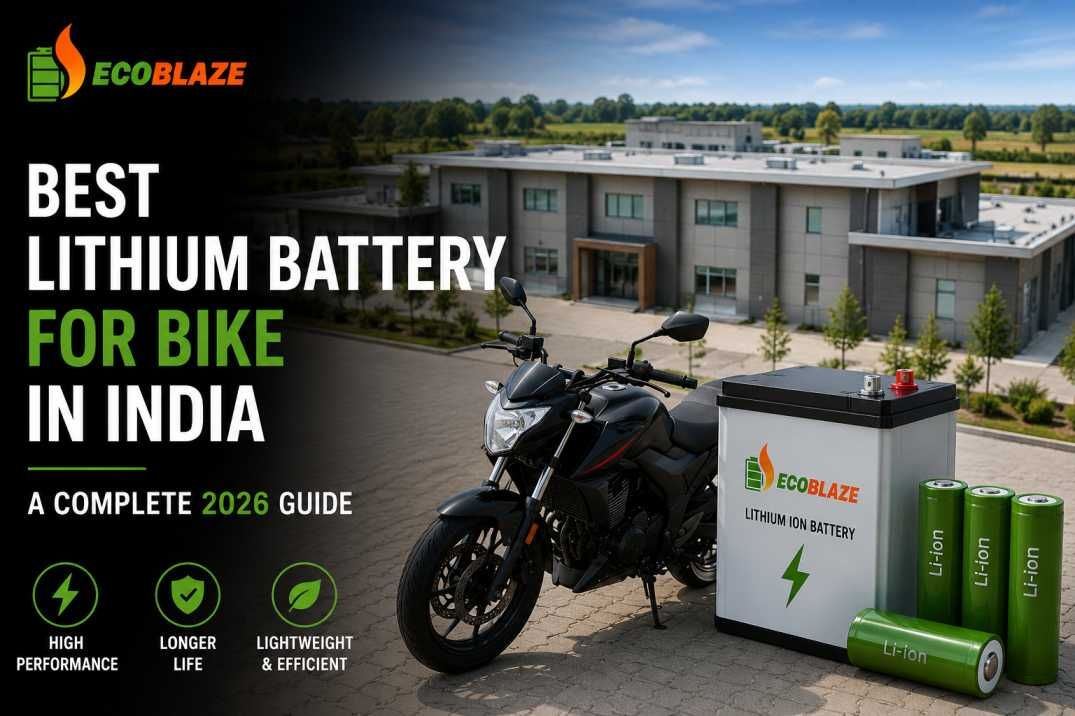
Electric two-wheelers — scooters, e-bikes, and mopeds — are everywhere on Indian roads now, and for good reason. They’re cheap to run, quick around the city, and genuinely fun once you get used to them. But here’s the thing: the battery is what makes or breaks the whole experience. It decides how far you go, how long it lasts before you’re shopping for a replacement, and how often you’re stuck waiting around for a charge.
So if you’re trying to figure out the best lithium battery for bike use, you’re in the right place. Let’s walk through what actually matters—no jargon overload, just the stuff that’ll help you make a smart choice.
Why Lithium Replaced Lead-Acid for Two-Wheelers
If you’ve ridden an older electric scooter, you probably remember the lead-acid battery days—heavy, slow to charge, and never lasting as long as you’d hoped. A lead-acid pack gives you maybe 300–500 charge cycles and takes a painful 8-10 hours to charge fully. That’s not exactly convenient if you need your bike for the morning commute.
A lithium battery for bike applications — usually NMC chemistry — flips the script completely. You’re looking at 1,000+ cycles, a full charge in around 3 hours, and a pack that weighs roughly 40% less than the lead-acid equivalent. For a two-wheeler, that weight difference isn’t just a number — it directly affects how far you go, how quickly you accelerate, and how the bike feels overall. Modern two wheeler batteries are built around exactly this advantage, which is why switching to a lithium battery for bike use has become such a popular upgrade.
NMC vs. LFP: Which Is Better for Lithium Batteries in Bike Use?
This topic is probably the most common question we get, so let’s settle it. For electric two-wheelers, NMC (Nickel Manganese Cobalt) is generally the better fit, and here’s why:
- Higher energy density — more range for the same pack size and weight
- Cycle life of 1,000+ — roughly 3-4 years of daily use
- Lighter overall pack, improving handling and efficiency
LFP, on the other hand, is more common in three-wheelers and commercial vehicles, where cycle life and thermal stability under heavy daily use matter more than shaving off a kilo or two. But for a personal scooter or e-bike, NMC’s energy density advantage usually wins out.
Cylindrical NMC 21700 cells are the current standard for quality two-wheeler packs — they strike a good balance of energy density, safety, and manufacturing consistency. If a seller can’t tell you whether their pack uses NMC or LFP cells, that’s worth asking twice about before you buy.
What to Check Before Buying a Lithium Battery for Your Bike
1. Voltage Compatibility
Common two-wheeler voltages are 48V, 60V, and 72V. The replacement battery must match your motor controller’s voltage—mismatched voltage can damage the controller or simply not work. If you’re unsure, check your existing battery’s label or the vehicle’s spec sheet.
2. Capacity (Ah) and Range
Capacity determines how far you can ride on a single charge with a lithium battery for bike use. A higher Ah rating means more range but also more weight and cost. Match capacity to your typical daily distance rather than buying the maximum available—carrying unused capacity is wasted weight.
3. IP65 Rating Minimum
Two-wheelers are exposed to rain, road spray, and dust. IP65 means the battery is fully dust-tight and protected against water jets—essential for riding through Indian monsoons without battery failure.
4. Charging Time
Look for packs that reach full charge in around 3 hours with the recommended charger. Faster charging means less time waiting and more time riding, especially useful if you commute daily.
5. Battery Management System (BMS)
A smart battery management system protects against overcharge, over-discharge, overcurrent, short circuit, and overheating, with cell-level voltage monitoring. This is what keeps a lithium pack safe and extends its usable life — don’t compromise here.
6. Weight and Dimensions
If you’re retrofitting an existing vehicle, check that the battery’s physical dimensions fit your battery compartment. A lighter pack also means better range and less strain on the motor.
7. AIS 156 Certification
Mandatory for any lithium battery used in a registered electric vehicle in India. It confirms the pack has passed mechanical, thermal, and electrical safety testing under certifications and compliance standards. Always confirm certification before purchase.
How Much Should a Lithium Battery for Bike Cost?
Pricing varies quite a bit depending on capacity, brand, and chemistry, but here’s a rough way to think about it: a lithium battery for bike use will almost always cost more upfront than a lead-acid pack — sometimes 2-3 times more. That sounds steep until you do the math on replacements.
Remember, a lead-acid battery typically needs replacing every 8-12 months. A good lithium battery for bike applications can run for 3-4 years before you’re thinking about a replacement. So over that same period, you might buy 3-4 lead-acid sets versus just one lithium pack. Add in the fuel/electricity savings from a lighter bike and faster charging, and the lithium option usually wins on total cost — not just performance.
A few things that affect the price you’ll pay:
- Capacity (Ah): Higher capacity = higher price, but also more range
- Cell brand and grade: A-grade cells cost more but last longer and perform more consistently
- BMS quality: A smart BMS with IoT features adds to the cost but pays off in safety and longevity
- Certification: AIS 156 certified packs may cost slightly more, but skipping this isn’t worth the risk
Don’t just compare sticker prices between brands — compare what’s actually inside the pack.
Lead-Acid vs Lithium Battery for Bike: Comparison
| Factor | Lead-Acid | Lithium (NMC) |
|---|---|---|
| Cycle Life | 300–500 cycles | 1,000+ cycles |
| Lifespan | 8–12 months | 3–4 years |
| Charging Time | 8–10 hours | ~Faster than Lead-Acid |
| Weight | Heavy | ~40% lighter |
| Maintenance | Water topping required | None |
| Range Impact | Lower (weight penalty) | Higher (lighter pack) |
| IP Rating | Rarely rated | IP65 available |
How to Get the Longest Life from Your Lithium Battery for Bike
Good news — keeping a lithium battery for bike use healthy doesn’t take much effort. Following the right maintenance tips can significantly extend its working life:
- Use only the manufacturer-recommended charger—mismatched chargers stress the BMS
- Avoid leaving the battery fully discharged for extended periods
- Store in moderate temperatures (15°C to 35°C) when not in regular use
- Let the BMS handle cell balancing—no manual maintenance is needed
- Avoid exposing the pack to direct, prolonged heat (parking in full sun for hours)
That’s really it. No water topping, no acid checks, no periodic servicing. Just sensible charging habits and a bit of care during the summer months.
FAQs: Lithium Battery for Bike
- What is the best lithium battery for bike use in India?
For most electric bikes and scooters, an NMC 21700 cylindrical cell pack with an IP65 rating, 1,000+ cycle life, and AIS 156 certification is the best lithium battery for bike applications currently available. - What is the best lithium battery for an electric bike?
NMC 21700 cylindrical cell packs are currently the standard for electric bikes and scooters, offering a strong balance of energy density, weight, and cycle life. Look for an IP65 rating, a 1,000+ cycle life, and AIS-156 certification. - How long does a lithium battery last on a bike?
A quality NMC lithium battery delivers 1,000+ charge cycles, translating to roughly 3 to 4 years of daily use, compared to 8-12 months for lead-acid. - Can I replace my bike’s lead-acid battery with lithium?
Yes, you can replace your bike’s lead-acid battery with a lithium battery in most cases, provided that the voltage matches your motor controller (commonly 48V, 60V, or 72V) and the physical dimensions fit your battery compartment. Use a lithium-compatible charger — lead-acid chargers are not interchangeable. - How long does it take to charge a lithium bike battery?
Most quality NMC packs reach full charge in around 3 hours with the recommended charger. Charging time varies based on capacity and charger output rating. - Is NMC or LFP better for an electric bike?
NMC is generally preferred for two-wheelers due to its higher energy density and lighter weight, which directly improve range. LFP is more common in three-wheelers and commercial vehicles where cycle life matters more than weight. - Do lithium bike batteries need maintenance?
No. Unlike lead-acid, there’s no water topping or manual upkeep. The smart BMS handles cell balancing automatically — just follow proper charging and storage practices.
Conclusion
Ultimately, choosing a lithium battery for bike use isn’t just about going electric—it’s about getting more range, faster charging, and years of reliable performance without the maintenance headaches that come with lead-acid. The same fundamentals apply across electric mobility, as covered in our guide on lithium vs lead-acid for e-rickshaws.
When you’re picking a lithium battery for bike use, keep it simple: prioritize NMC 21700 cells, the correct voltage match, IP65 rating, 1,000+ cycle life, a smart BMS, and AIS 156 certification. Get those fundamentals right and you won’t need to think about your battery again for years. And if you’re also evaluating suppliers, our roundup of top lithium battery manufacturers in India is a good starting point.
Ready to Upgrade Your Two-Wheeler Battery?
Ecoblaze manufactures AIS 156 certified NMC 21700 lithium battery packs for electric scooters and e-bikes—IP65 rated, ≥1000 cycle life, with smart BMS protection. Built in Ludhiana, we have over 30 years of manufacturing heritage.
Explore 2-Wheeler Batteries | Read: Top Lithium Battery Manufacturers in India | Contact Us