
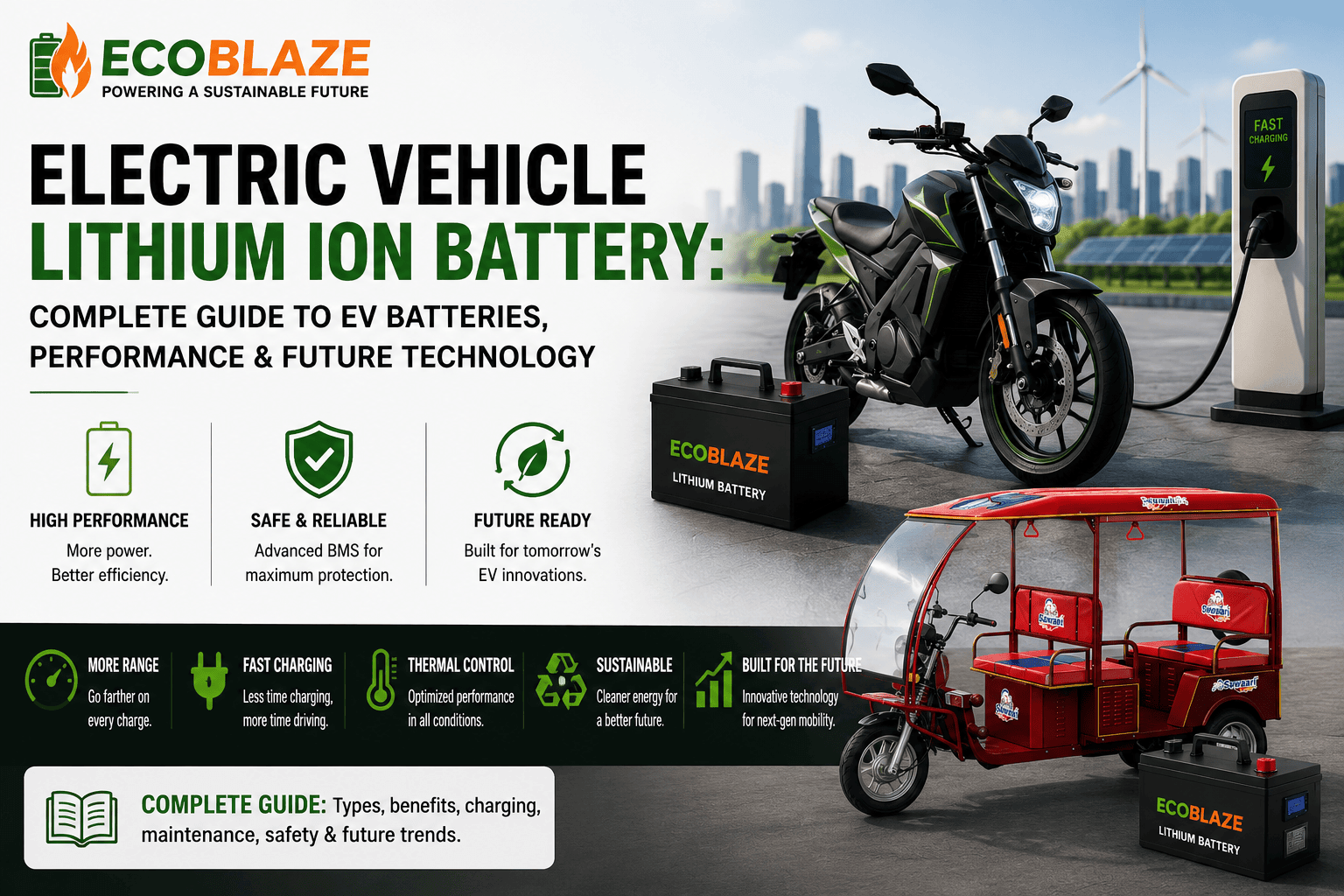
Electric Vehicle Lithium Ion Battery: Everything You Need to Know
Electric mobility is reshaping transportation worldwide. From electric scooters to commercial EVs and passenger cars, batteries have become the heart of modern vehicles. Among all technologies available today, the Electric Vehicle Lithium Ion Battery remains the dominant choice because of its high energy density, fast charging capability, and longer lifespan.
An electric vehicle lithium-ion battery stores and supplies the electrical energy needed to power motors in electric vehicles. Compared with older technologies, modern lithium ion batteries deliver better performance, improved charging cycles, and higher efficiency.
As EV adoption grows, understanding Electric Vehicle Lithium Ion Battery technology becomes essential for businesses, fleet operators, and everyday users.
This guide covers:
✔ EV battery types
✔ Battery pack components
✔ Lifespan and maintenance
✔ Battery recycling
✔ Future battery technology
✔ Buying considerations
What is an Electric Vehicle Lithium Ion Battery?
An Electric Vehicle Lithium Ion Battery is a rechargeable energy storage system designed specifically to power EV motors.
Unlike traditional fuel systems, these batteries store electrical energy chemically and release it during operation.
Main functions include:
- Energy storage
- Power distribution
- Fast charging support
- Regenerative braking support
- Long-term efficiency
The Electric Vehicle Lithium-Ion Battery is widely used because of the following:
- High power-to-weight ratio
- Better energy density
- Long lifespan
- Lower maintenance
How Does an Electric Vehicle’s Lithium-Ion Battery Work?
A battery operates through the movement of lithium ions between:
- Cathode
- Anode
- Electrolyte
- Separator
During discharge:
Lithium ions generate electricity and power the vehicle.
During charging:
The process reverses and energy is stored again.
This cycle enables repeated use over thousands of charging sessions.
Main Types of Electric Vehicle Lithium-Ion Batteries
Different battery chemistries affect performance.
1. Lithium Iron Phosphate (LFP)
Features:
✔ Longer lifespan
✔ Better safety
✔ Thermal stability
✔ Lower cost
Common in:
- E-rickshaws
- Electric scooters
- Standard EVs
2. Nickel Manganese Cobalt (NMC)
Benefits:
✔ High energy density
✔ Longer range
✔ Lightweight design
Often used in:
- Premium EVs
- High-performance vehicles
3. Lithium Titanate (LTO)
Advantages:
✔ Extremely fast charging
✔ Long cycle life
✔ High safety
Components of Electric Vehicle Battery Pack
Every electric vehicle battery pack includes several critical parts.
Battery Cells
Individual battery cells store energy.
Common formats:
- Cylindrical cells
- Prismatic cells
- Pouch cells
Battery Modules
Multiple cells form modules.
Several modules combine into one battery pack.
Read more about: Lithium Ebike Battery
Battery Management System (BMS)
The BMS controls:
- Temperature
- Voltage balance
- Overcharging prevention
- Safety monitoring
Cooling Systems
Thermal management prevents the following:
- Overheating
- Battery degradation
- Performance loss
Battery Capacity & Voltage in EVs
Battery sizes vary by vehicle.
Examples:
- Electric bikes: 36V–72V
- Electric scooters: 48V–72V
- Passenger EVs: 50–100+ kWh
Battery capacity directly impacts:
- Driving range
- Charging time
- Performance
Benefits of Electric Vehicle Lithium-Ion Batteries
Better Energy Density
Higher energy storage allows the following:
- Longer driving range
- Lightweight vehicles
Faster Charging
Most modern EV batteries support the following:
- Rapid charging
- Reduced downtime
Longer Lifespan
Many Electric Vehicle Lithium-Ion Battery systems last:
- 8–20 years
- 1200–5000 cycles
Improved Efficiency
Modern ev batteries deliver the following:
- Stable performance
- Better power output
EV Battery Maintenance Tips
Following proper EV battery maintenance tips can increase the battery’s lifespan.
Recommended practices:
✔ Avoid frequent 0–100% charging
✔ Maintain 20–80% charge level
✔ Prevent overheating
✔ Use original chargers
✔ Store batteries in moderate temperatures
These steps improve battery health significantly.
Read More: Electric Bike Lithium Battery
Battery Recycling & Sustainability
As EV adoption increases, battery recycling becomes important.
Recycling helps recover:
- Lithium
- Nickel
- Cobalt
- Other valuable materials
Recovered materials reduce:
- Mining demand
- Environmental impact
Research suggests recycled batteries may supply significant future battery material demand.
Environmental Impact of EV Batteries
The transition toward EVs reduces fuel dependence but creates demand for battery materials.
Challenges include:
- Lithium mining
- Resource extraction
- Water usage
Future technologies focus on:
- Sustainable mining
- Recycling
- Alternative chemistries
Future of Electric Vehicle Lithium Ion Battery Technology
The future includes:
Solid-state batteries
Expected benefits:
- Higher energy density
- Better safety
Sodium-ion batteries
Advantages:
- Reduced dependence on rare minerals
Improved recycling systems
Advanced recovery methods will improve sustainability.
Growing Demand for EV Batteries in India
Demand is increasing for:
- two wheeler batteries
- three wheeler batteries
- Commercial EV batteries
Growth drivers:
- Rising fuel prices
- Government subsidies
- Sustainable transportation goals
Role of Lithium Battery Manufacturers
Every major:
is investing in:
✔ Better battery chemistry
✔ Advanced BMS technology
✔ Faster charging systems
Real-World Example
Fleet operators switching to Electric Vehicle Lithium Ion Battery systems often report:
- Lower maintenance cost
- Better mileage
- Longer battery lifespan
- Reduced downtime
This demonstrates why lithium technology dominates EV markets.
Conclusion
The Electric Vehicle Lithium Ion Battery has become the foundation of modern electric transportation. Its superior energy density, fast charging capability, long lifespan, and efficiency make it the preferred solution across EV segments.
As battery technology evolves through improved energy storage, recycling systems, and new chemistry innovations, future electric vehicles will become safer, cheaper, and more sustainable. Choosing quality battery systems today ensures better performance and long-term reliability.
People Also Ask and FAQs
- What is an electric vehicle lithium ion battery?
A rechargeable battery system that stores and delivers energy to power EV motors. - How long do EV lithium ion batteries last?
Most last between 8 and 20 years depending on charging and usage. - Which EV battery chemistry is best?
LFP is safer and durable, while NMC offers higher energy density. - Are EV batteries recyclable?
Yes. Valuable materials including lithium and nickel can be recovered. - What affects EV battery lifespan?
Temperature, charging habits, and battery management systems. - Why are lithium ion batteries used in EVs?
They provide higher energy density and longer lifespan. - Can EV batteries be recycled?
Yes. Recycling recovers critical battery materials. - Do EV batteries require maintenance?
Minimal maintenance compared to conventional systems. - How fast can EV batteries charge?
Fast charging depends on battery type and charger capacity. - What is battery degradation?
Gradual reduction in battery capacity over time.